At a Glance
- What: Casa Grande authorized negotiations for an effluent purchase agreement with the Cactus Mine (formerly Sacaton Mine)
- Volume: Up to 1,300 acre-feet per year of treated wastewater
- Infrastructure: Mining company would build and maintain delivery infrastructure at its own expense
- Why it matters: Approximately 1,350 acre-feet of effluent went uncredited in 2024; direct delivery ensures productive reuse
- Mine timeline: Feasibility studies in 2026, construction decision late 2026, first copper production targeted for 2029
- Next steps: Final agreement must return to council for approval; broader effluent strategy expected by early March
Casa Grande City Council authorized negotiations for an effluent purchase agreement with the Cactus Mine—the former Sacaton Mine—on January 5, 2026. The decision allows City Manager Larry Rains to negotiate a deal for up to 1,300 acre-feet per year of treated wastewater. This Casa Grande effluent allocation would supply the reopening copper mine while putting currently uncredited water to productive use.
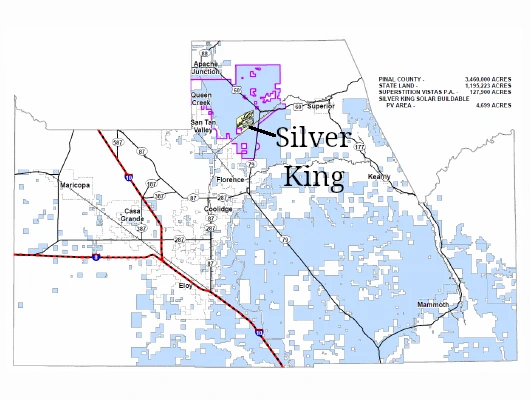
Arizona Sonoran Copper Company owns the project through its subsidiary Cactus 110, LLC. Longtime residents may remember the site as the Sacaton Mine.
The agreement is part of the city’s broader effluent allocation strategy discussed at a December 15 study session. At that meeting, City Manager Larry Rains noted that approximately 1,350 acre-feet of treated effluent went uncredited in 2024. The city cannot earn credits when stormwater or irrigation district flows mix with its effluent in the wash.
What Residents Gain From the Mine Effluent Deal
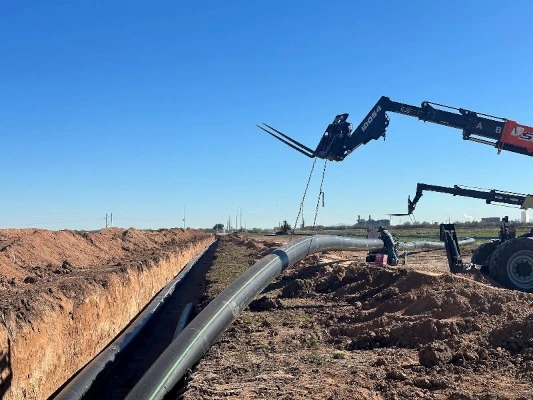
The arrangement would reduce groundwater pumping and support the reopening copper mine. Under the proposed terms, the mining company would build and maintain all delivery infrastructure at its own expense. In return, the city gains a direct-use customer, so this effluent doesn’t go uncredited.
“We have this water going down the Wash we’re getting no credit for, and we’ll be able to put it to use,” Councilmember Matt Herman said. He added that the deal “will also leave more water in the ground, which as we learned earlier is very important at this juncture in our community.”
Herman called the arrangement “a pretty good deal” for everyone involved. He noted the mine’s “economic investment” in infrastructure to become “better stewards of the environment.”
How Treated Effluent Will Support Copper Operations
Arizona Sonoran Copper Company has tested Casa Grande’s treated effluent and found it well-suited for their operations. The company plans to use the water for mining operations and dust control at the Cactus Mine site.
The company has also conducted initial engineering on a delivery line. Their findings show that effluent could flow by gravity from the city’s discharge point to the mine site.
The mine site holds water permits extending to 2070, with active wells from the ASARCO era. Despite this ready access to groundwater, Arizona Sonoran requested treated effluent with the goal of preserving groundwater and reducing discharge to the Santa Cruz Wash.
“The company seeks to demonstrate responsible water stewardship to the community of Casa Grande,” City Manager Larry Rains said. He noted their goal is “preserving groundwater within the community and decreasing the volume of discharge to the north branch of the Santa Cruz Wash.”
From Sacaton Mine to Cactus Project
City Manager Larry Rains provided background on the project’s history for residents who may not have followed recent developments.
ASARCO operated the site as the Sacaton Mine during the 1970s and 1980s before ceasing operations in 1984. After decades of dormancy, Elim Mining acquired the property in 2019. The company changed its name to Arizona Sonoran Copper Company in July 2021. Today, its subsidiary Cactus 110, LLC holds the land and mineral rights.
Arizona Sonoran now calls it the Cactus Project, which includes the original Sacaton pit—now known as Cactus East and Cactus West—plus the Parks/Salyer deposit. As detailed in a November 2025 presentation to city council, the project contains an estimated 11 to 12.5 billion pounds of copper. Their plan calls for open-pit mining with heap leach processing to produce copper cathodes.
Project Timeline and Economic Impact
The mine’s development follows a projected timeline toward production. If the project stays on schedule:
- 2026: Feasibility studies finalized and construction decision
- Early 2027: Construction begins (approximately 24-month build)
- 2029: First copper production
Production projections from the October 2025 pre-feasibility study show the mine producing approximately 100,000 tons of copper cathode annually over 22 years. The project has an after-tax net present value of $2.3 billion, based on a base case copper price of $4.25 per pound in the study.
Economic impact analyses project more than 600 direct jobs during operations. The project would also create indirect jobs through local economic activity. Rains compared the economic impact to hosting a Super Bowl every year or two.
Community polling conducted by the company shows 87 percent support for reopening the mine, according to their most recent survey.
Where Casa Grande’s Effluent Goes
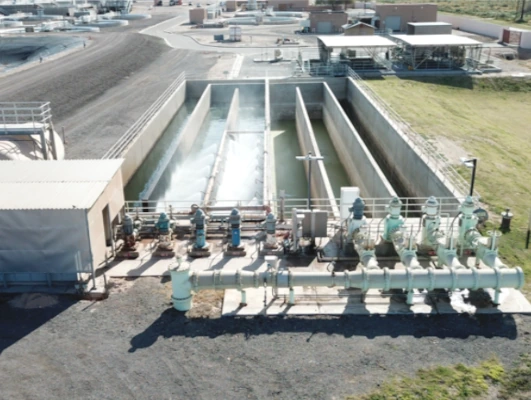
The city’s goal is to maximize the value of every drop of treated wastewater. Currently, Casa Grande processes approximately 6,300 acre-feet of effluent annually at its Water Reclamation Facility.
Most of this water serves productive purposes. Dave White Municipal Golf Course receives about 540 acre-feet. Desert Basin Generating Station uses roughly 1,200 acre-feet for industrial processes. Another 4,300 acre-feet flows to the managed recharge facility in the Santa Cruz Wash.
However, some remaining effluent generates no credit. Upstream disturbances, stormwater runoff, and irrigation district discharges into the wash interrupt credit calculations. When these events occur, the city doesn’t earn credit for effluent in the system.
“The goal is that we maximize the recharge into long-term storage credits, and we direct deliver the effluent so that we essentially are not losing any type of credit or any type of value,” Rains explained.
Direct delivery to the Cactus Mine would count as productive reuse rather than potentially uncredited discharge.
Council Approval and Remaining Steps
The council approved the motion without opposition. City Attorney Brett Wallace clarified that the vote authorized negotiations only. The final agreement must return to council for approval.
“We’ve been trying to move forward on this effluent policy,” Mayor Lisa Navarro Fitzgibbons said. She expressed hope that the city would finalize its broader effluent allocation strategy by March 2026.
Effluent Strategy Continues Through March
Casa Grande’s effluent allocation work extends beyond this single agreement. The city has scheduled study sessions through early 2026 covering volume projections, allocation approaches, and updates on the state’s Alternative Designation of Assured Water Supply program.
External consultants from WestWater Research, the Kyl Center, Arizona Water Company, and city staff are collaborating on the strategy. Rains said the city would likely finalize the comprehensive approach by early March.
The city will present the finalized Cactus 110 effluent purchase agreement to council at a future meeting once negotiations conclude.