Key Points:
- Casa Grande City Council voted 7-0 to approve KPPC Advanced Chemicals’ permit, reversing the Planning Commission’s 3-4 denial
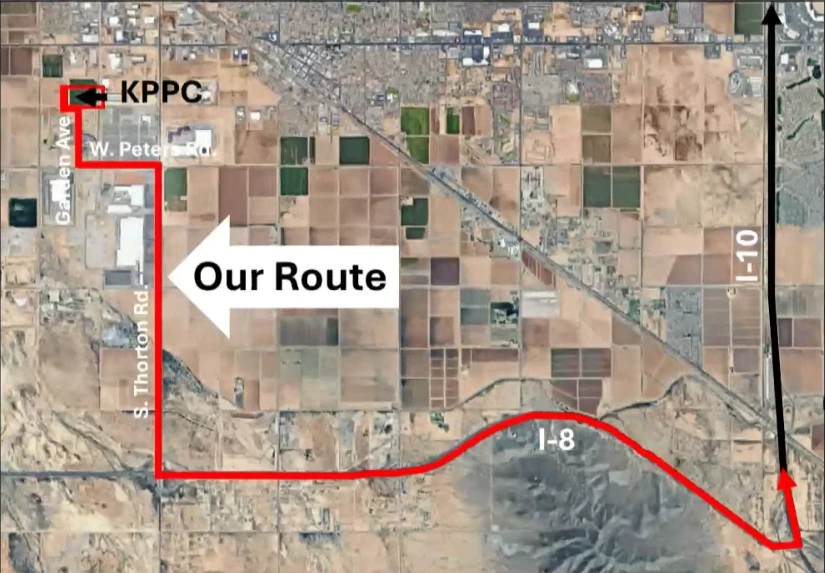
- KPPC committed to routing its 10-12 daily isotainer trucks via Interstate 8, not Pinal Avenue
- The city cannot legally mandate truck routes, but KPPC committed to codifying the I-8 route in contracts with transport companies
- The $120 million Phase 1 will create 61 jobs, potentially reaching 80 at full buildout
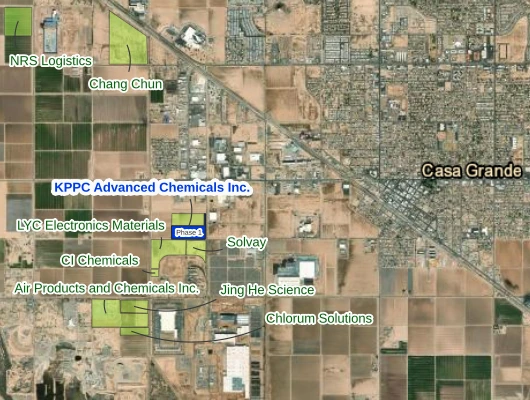
- KPPC joins a growing cluster of semiconductor supply chain companies on Casa Grande’s industrial west side
- Chemicals are corrosive but not flammable or explosive, according to the applicant
- Fire department confirmed responders can handle the materials, the applicant said
- Production expected to begin in late 2027
The Casa Grande City Council unanimously approved a conditional use permit for KPPC Advanced Chemicals on February 2, 2026. The 7-0 vote reversed the Planning and Zoning Commission’s earlier 3-4 denial, which cited concerns about hazardous material trucks traveling through residential areas. KPPC committed to routing trucks via Thornton Road to I-8, bypassing Pinal Avenue. KPPC will now build a semiconductor chemical manufacturing campus producing ultrapure hydrochloric acid and ammonium hydroxide for Intel and TSMC, with sulfuric acid production possible in future phases if market conditions warrant.
The decision clears the way for a $120 million Phase 1 investment and 61 full-time jobs initially, with up to 80 at full Phase 1 buildout. Production is expected to begin in late 2027.
Council Acted as Quasi-Judicial Body
Mayor Lisa Navarro Fitzgibbons opened the hearing by explaining the council’s unique role. “This is a little unique situation that we’re in ’cause we’re serving as a quasi-judicial proceeding,” she said. Council members would “base their decision solely on the applicable approval criteria in the city code and the evidence presented on the record.”
She emphasized the decision “must be based on this criteria and competent evidence rather than on opinion or general public sentiment about the project.”
This framework meant the council had to evaluate whether KPPC’s application met the specific conditional use permit criteria in city code—not whether members personally favored the project. The property’s existing zoning already established certain development rights that would guide the council’s decision.
Before proceedings began, the mayor asked council members to disclose any ex parte communications related to the item. Several members reported emails from Brett Benedict, who chairs the Planning and Zoning Commission. Council members also received correspondence from Dean Dill, Joe Hankin, and land broker Kirk McCarville.
Councilmember Bob Huddleston disclosed he received a phone call from attorney David Fitzgibbons and had declined a meeting request from McCarville.
Property Zoning Rights Established Foundation for Decision
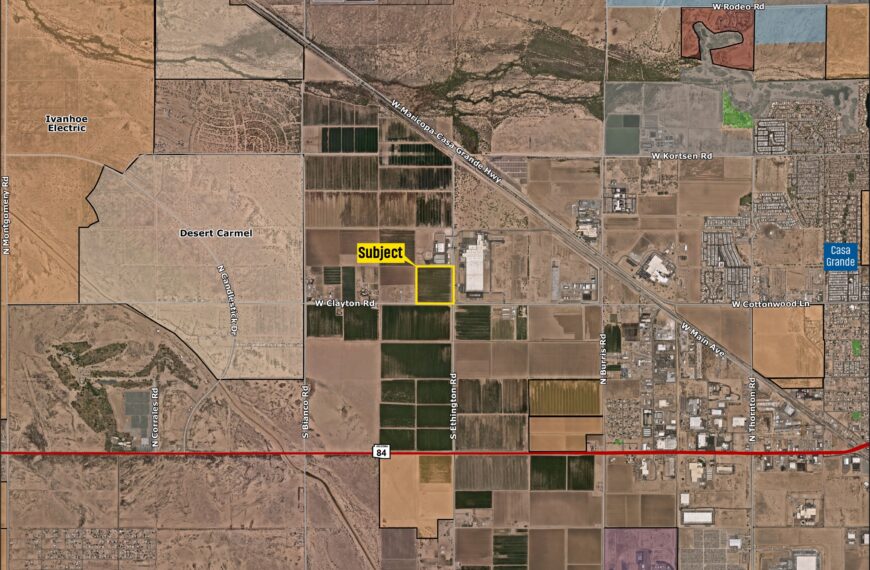
The 26-acre site is zoned General Industrial (I-2), which permits chemical manufacturing with conditional use permit approval. This zoning designation was established in April 2022. All surrounding properties share the same industrial zoning.

Staff recommended approval, finding the project met all conditional use permit criteria in city code. Senior Planner Jaclyn Sarnowski noted the city’s General Plan designated this area specifically for manufacturing and industry to concentrate such uses rather than spreading them throughout the city.
Councilmember Matt Herman focused on this point during deliberations. “The area is zoned I-2,” he said. “That’s all we’re considering tonight—the land, the use of it, and then the safety. And I think they’ve checked all those boxes.”
Addressing Planning Commission Concerns
The appeal followed the commission’s January 8 denial.
Architect Beau Dromiack acknowledged the commission raised valid questions. “Two years ago, three years ago is a different Casa Grande,” he said. “The pressures are different, the traffic’s different, the growth is different, and we kinda think that is the driver for some of the concerns that came up at the planning meeting.”
He described Casa Grande’s changing role in the region. “It’s becoming a central part of the supply chain infrastructure for the state of Arizona. There’s just no escaping that. And it’s supply chain that’s tied directly to the semiconductor advanced manufacturing.”
Transportation Route Was Central Issue
The applicant’s commitment to use Interstate 8 instead of Pinal Avenue directly addressed the planning commission’s primary concern.
KPPC expects 10 to 12 isotainer truck deliveries daily, Monday through Friday, between 8 a.m. and 5 p.m. A traffic study showed the project will generate 61 AM and 61 PM peak-hour trips, primarily from employee commutes. A three-day inventory strategy will spread truck deliveries throughout the workday to avoid congestion.
Dromiack explained why KPPC prefers the I-8 route despite its longer distance. “The I-8 route, interestingly enough is longer, but it’s actually easier, less traffic, it’s safer, it’s out of the density, it’s lower risk,” he said. “And if you have a high quality product that you care so much about—why take it on a high-risk route?”
He confirmed KPPC would codify this route in contracts with transport companies. “It is a route that Austin and team, KPPC team will be codifying in contracts with the transport companies to make sure they stay on that route,” Dromiack said. “We kinda think it’s a great opportunity for us, as a team, to be potentially that role model for your future projects.”
General Manager Austin Lu added that KPPC would consider alternative routes when the city completes them. “When it’s approved, when the city is comfortable and the community’s comfortable, we would like to explore that as an option,” he said. “But not right now.”
City Attorney Brett Wallace explained why routes cannot be legally mandated as permit conditions. State and federal statutes preempt cities from establishing hazardous materials routes for individual companies. Enforcement would also be difficult.
Mayor Pro Tem Brent BeDillon said the I-8 commitment addressed the main concern from the planning commission. “If you are committed to that, I think that addresses the majority of the problems that were brought up during planning and zoning,” he said.
Councilmember Matt Herman endorsed the road infrastructure. “I would like to say that Thornton is a big, nice, beautiful road,” he said. “It’s just been redone.”
Chemicals Are Corrosive, Not Explosive
Dromiack clarified that the chemicals pose different risks than some commissioners initially feared. The company will produce semiconductor-grade hydrochloric acid and ammonium hydroxide.
“The chemicals are corrosive,” Dromiack explained. “There’s no fire, there’s no explosions, and there’s no concentrated gases emitted if there’s an accident.”
He described the emergency response protocol. “What they do right off the bat if something happens, they come and contain and cordon off, and then there’s a neutralization process if it’s needed,” he said. “They have a third-party hazmat company come in to actually take any disposal, if that ever was to happen.”
In most cases, Dromiack said, “if it hits the asphalt, it just kind of evaporates, and if it gets into below the asphalt, it doesn’t hurt the water table and the amount of it would never be enough anyway”
Austin Lu emphasized the chemicals’ common uses. “Hydrochloric acid is used in pool descaling,” he said. “These are just different grades, but they are essentially the same chemical. And ammonia hydroxide is what is used to make fertilizer.”
Isotainer Safety Features Detailed
According to Lu, KPPC uses specialized ISO tank containers, or isotainers, designed to meet rigorous international and U.S. Department of Transportation standards. These same systems are already used by existing operations in Casa Grande and the greater Phoenix region.

Dromiack described the containers’ construction. “It’s double-lined, it’s stainless steel, it’s coated depending on what chemicals it’s carrying,” he said. The containers feature pressure relief valves that prevent pressurized releases in accidents.
The isotainers attach to custom chassis trailers with safety latches. “It’s not just thrown on any back of semi and taken off,” Dromiack explained. “The chassis and the isotainer frame, exoframe basically, operate as one.”
Land use consultant Jessica Sarkissian noted KPPC has over 20 years of experience and has transported over 10,000 containers per year with no issues.
Plant Safety Design Explained
Councilmember Herman asked about on-site safety measures. Dromiack described comprehensive containment systems.
“We have double containment designed everywhere,” he said. If a spill occurs, it flows into a secondary containment area, and a hazmat company removes it when required.
He described the facility’s design standards. “Our team has designed this incredibly advanced facility that’s all about safety and cleanliness. The clean room to test quality, the whole process is about ultra pure safety and product.”
Lu explained that automated processes prevent worker contact with chemicals. “None of our operators would have a chance to actually touch it, just to keep it that clean,” he said. “Our process is well contained, automated, and also recordable and traceable.”
Air Quality Controls Address Emissions Concerns
Councilmember Sean Dugan asked about potential air emissions. Dromiack confirmed the facility will use scrubbers to eliminate harmful discharges.
“We have air permitting and water permitting required through the county,” he said. “We have scrubbers designed so any off-gas gets completely scrubbed and meets all the county standards. And it’s tested regularly. So there is no emissions that would enter the atmosphere that’s a problem.”
The facility must obtain an Air Quality Permit from Pinal County, which strictly limits and monitors potential air emissions.
Emergency Response Capabilities Confirmed
Lu said the fire department confirmed that local emergency responders are fully capable of handling these materials.
The applicant met twice with the Casa Grande Fire Department to discuss safety procedures and emergency response protocols.
Jake Pierce, a retired 30-year fire department veteran from Michigan, spoke during public comment. “If your fire department has no problem with this, I mean, I know you gotta do your due diligence, but that should carry some heavy weight,” he said. “They’re not gonna approve nothing ridiculous.”
Councilmember Huddleston, a 33-year veteran of the Casa Grande Police Department and former police chief, said he found the safety measures satisfactory. “I think the applicant and the city has done a good job of addressing the concerns,” he said. “This is industry and I think there’s hardly an industry out there that doesn’t have some level of risk to it. But I think our city and fire department especially have mitigated those risks.”
Land use consultant Jessica Sarkissian confirmed the fire department is hazmat certified and has technical specialists on contract for additional support.
Public Comments Raised Concerns and Support
Three residents spoke during public comment. Vince Bianco expressed opposition, questioning the concentration of industrial uses on the city’s west side and raising concerns about impacts to groundwater. He also questioned whether local residents would fill the jobs created.
Austin Lu responded to Bianco’s concerns about the chemicals. They are “not something you dig up from the bottom of a mine or any toxic waste,” he said. “These are just very general chemicals. We just purify them to the standard that’s needed in the semiconductor community.”
Sarkissian addressed employment concerns. Once the plant is built, she said, KPPC “fully intends to hire local residents. These will be high-paying jobs.”
She highlighted Casa Grande’s strategic position. “You are the hotspot between Tucson and Phoenix,” she said.
Councilmember Dugan noted hazardous materials already travel through Casa Grande regularly. “I know chemicals have been shipped through our community for a hundred years in the form of fertilizer,” he said. “Every time we go to a gas station, the fuel doesn’t just come up from the ground right there. They are trucked in.”
Semiconductor Supply Chain Context
City Manager Larry Rains provided context for the growing chemical industry presence. Rains estimated there are “as many as nine” chemical-type companies in the area, with three approved most recently. These focus on “either logistics for chemical supply to TSMC and/or specific chemicals that will be used in their process,” he said.
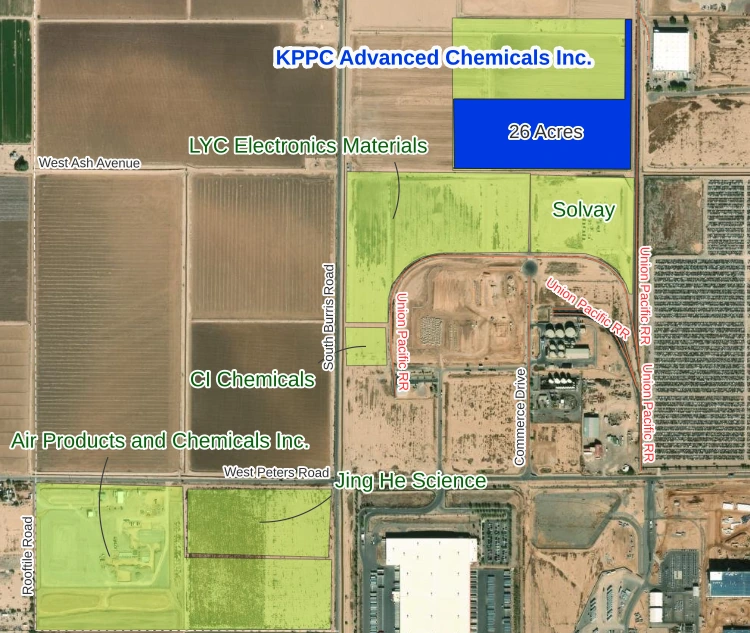
Lu confirmed the chemicals will serve nearby semiconductor fabs. “There’s only two major sites, one in North Phoenix and then the other one in Chandler,” he said. “So essentially TSMC and Intel.”
Councilmember Dugan framed the project in broader terms. “This is considered a supply chain for our semiconductors bringing that supply chain home into the United States,” he said. “It is a matter of national and economic security that we have this production here in the United States.”
Land broker Kirk McCarville had previously told Pinal Central he was concerned the planning commission’s denial could affect future local investment from semiconductor supply chain companies.
Production Timeline and Future Phases
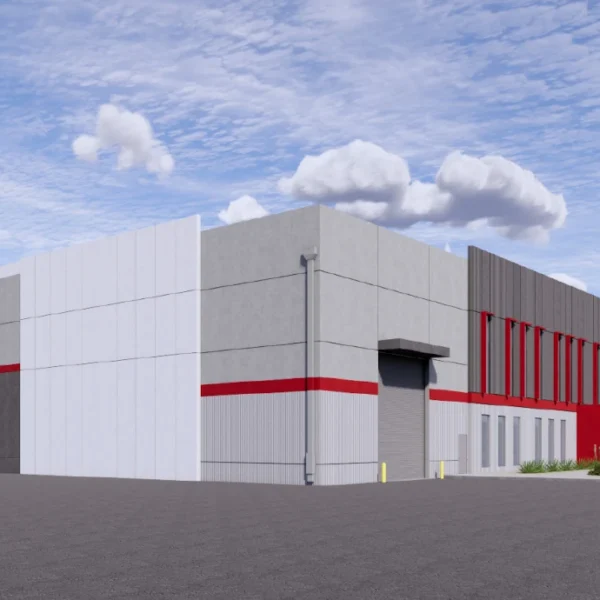
Phase 1 will develop approximately six acres for purifying and blending semiconductor-grade chemicals. The facility will include warehousing, laboratories, quality control, and office space.
KPPC has reserved space for a semiconductor-grade sulfuric acid facility within five to seven years, subject to market conditions. Future phases would require separate approvals and additional traffic analysis.
Phase 1 will employ 58 daytime workers and three overnight staff.
Road Infrastructure Development Ongoing
The site connects to a five-lot plat under review that will create roadway connections. Garden Avenue will link the site to Gila Bend Highway. An Ash Avenue alignment will provide access to Commerce Drive.
The city continues working on alternative bypass routes for industrial traffic. However, the timeline remains unknown.
Permit Conditions and Next Steps
The approved resolution requires KPPC to fulfill all permit conditions before receiving a use and occupancy permit. All conditions constitute restrictions running with the land, binding the owner and any successors.
The facility must comply with regulations from multiple agencies. These include EPA hazardous waste registration, Pinal County air quality permits, Arizona Department of Environmental Quality stormwater permits, city wastewater permits, and comprehensive fire department permits ensuring compliance with the International Fire Code.
KPPC can now proceed with site development and construction, targeting production startup in late 2027.